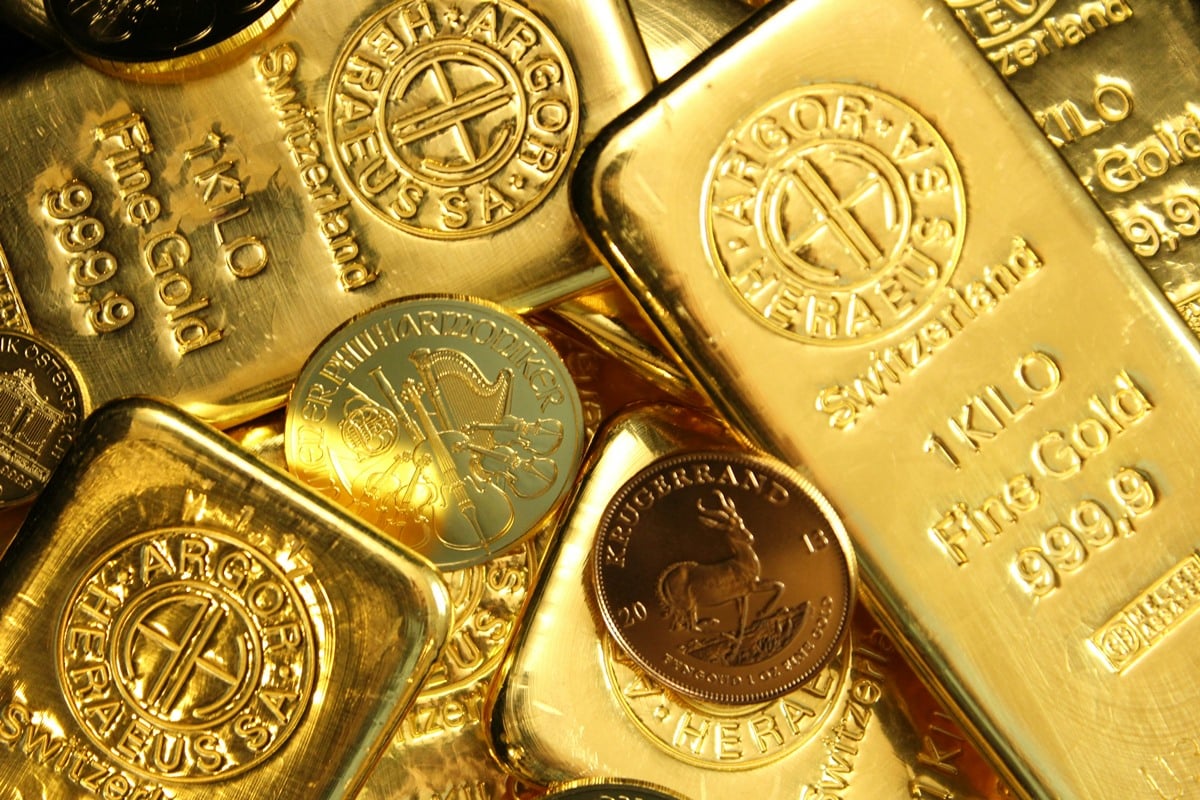
Gold futures contracts traded in New York are up nearly 71% this year, on track for their best annual gain in 46 years.
The last time gold had such a strong year, Jimmy Carter was president, a crisis was unfolding in the Middle East, inflation was rising, and the United States was in the middle of an energy crisis.
Today, tariffs are distorting international trade, conflict is raging with Russia’s war on Ukraine, relations between Israel and Iran have soured, and the US is seizing oil tankers off the coast of Venezuela. In times of uncertainty, investors turn to safe havens like gold.
A cloud of uncertainty
Gold is considered a resilient investment, and investors expect the yellow metal to hold its value in a crisis, if inflation rises or if the value of currencies falls.
“Uncertainty remains a key feature of the global economy,” said Joe Cavatoni, senior market strategist at the World Gold Council. “In this environment, gold has become increasingly attractive as a strategic diversifier and source of stability.”
For some investors, the downside of gold is that it doesn’t yield the same income as bonds. But when the Federal Reserve cuts interest rates as it has for the past several months, bond yields typically fall, making gold more attractive.
Gold futures traded around $2,640 an ounce at the start of the year. The yellow metal climbed above a record $4,500 an ounce on Monday. JPMorgan Chase analysts expect prices to rise above $5,000 per ounce in 2026, SEEbiz reports.
Gold’s 71% gain this year has far outpaced the S&P 500, which is up just 18%. In 2024, gold futures rose 27%, while the S&P rose 24%.
Expectations of some interest rate cuts by the Fed in 2026 are supporting gold growth. A weaker US dollar also helps the price rise, as it makes buying gold relatively more affordable for international investors.
Jewelers and people who own gold jewelry benefit from higher prices. The gold rush isn’t just fueled by Americans buying gold bars from Costco – it’s countries buying gold by the ton.
Central banks and geopolitics
Gold’s rise has been fueled by central banks themselves buying more gold, led by China.
One of the main reasons China’s central bank is increasing its gold holdings is to reduce dependence on US assets such as US Treasuries and the dollar, according to Ulf Lindahl, CEO of Currency Research Associates.
The shift became noticeable after Russia invaded Ukraine in 2022. Western governments froze Russian assets denominated in U.S. dollars, prompting governments in Russia — as well as China — to look for ways to reduce exposure to U.S. policy decisions, Lindahl said.
“The current wave of buying by central banks is different precisely because it is rooted in geopolitics,” Ole Hansen, head of commodity strategy at Saxo Bank, said in a note. “Freezing sovereign reserves and the wider fragmentation of the global financial system have introduced a structural element to gold demand that is likely to last for years.”
Central banks around the world have accumulated more than 1,000 tonnes of gold in each of the past three years, compared with an average of 400 to 500 tonnes a year over the previous decade, according to the World Gold Council.
Precious metals shine in 2025.
The rise of gold was followed by other precious metals such as silver, platinum and palladium.
Silver futures have risen as much as 146% this year, while platinum futures have gained almost 150% and palladium futures 100%.
For investors, precious metals serve as “a hedge against an increasingly uncertain world,” according to Hakan Kaya, a portfolio manager at Neuberger Berman.
That trend could continue. Lindahl of Currency Research Associates said he expects the price of gold to continue rising in 2026. With central banks increasing their gold reserves, there could be less gold in circulation on the market. Increased demand from regular investors, combined with less available supply, could lead to higher prices.
Also, concerns about huge government deficits and debt burdens are helping boost demand for precious metals, according to Matt Maley, chief market strategist at Miller Tabak + Co.
“As investors became more aware of these issues, they began to look to gold as a safe haven,” Maley said.