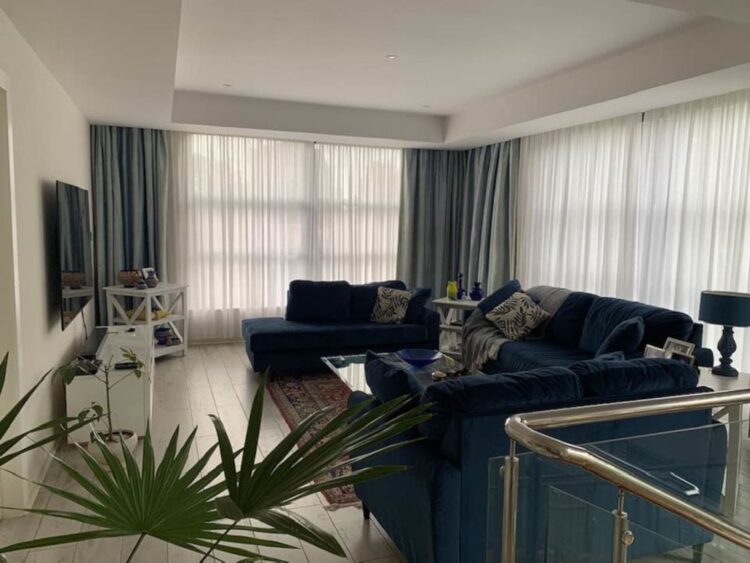
Hole in German housing laws that enables landlords to bypass the rentals by excessive collection of furnished apartments will be closed, the German Minister of Justice Stefanie Hubig said.
The Minister, from the Social Democratic Party of the Left Center, told the Media Greedruppe Bayern in the comments on Saturday that “some landlords think they can bypass the rents by placing two chairs into their apartment.”
“We want to stop at this scam,” Hubig added.
This week, Bundestag, or the lower home of parliament, extended the state brake price rental by 2029, which also applies to furnished apartments.
However, landlords can charge the so-called surcharge for equipping with basic rent. They do not have to specify this in the rental contract, which makes it difficult for tenants to understand costs.
Hubig said she wanted to better regulate what the landlords can charge for furniture.
“It’s simple important that the bedroom, living room and kitchen are designed so that you can move in with a suitcase or there are only a table and two chairs,” she said.
According to the German Union of the Leaspo, 53% of households live in rented accommodation, and more than three million households must spend more than 40% of their net housing costs.
The German social society emphasized that many people can no longer afford to pay rent.
“It is not enough to just expand the existing rules if the landlords can continue to bypass,” said, welcoming Hubig’s efforts to close the holes in the law, seebiz.
The Minister said that she was also partially furnished in Berlin, and apartments for partial commercial use at extremely high prices.
That practice will no longer tolerate, she said. “But: If the apartment is rented furnished at a reasonable price, then there is nothing wrong with that.”
Rental brake applies in areas that state governments determine as areas with a limited real estate market.
The price of new lease agreements may not be more than 10% higher than the average prices in the area at the beginning of the rental.
Hubig also announced the rules on the so-called period of payment of the rent. It is intended for the prevention of homelessness among the tenants.
“Anyone who is late with the payment of rent should be able to avoid the usual cancellation by paying the rent back,” Hubig said. “We will also ensure that an overview of additional costs becomes more transparent.”