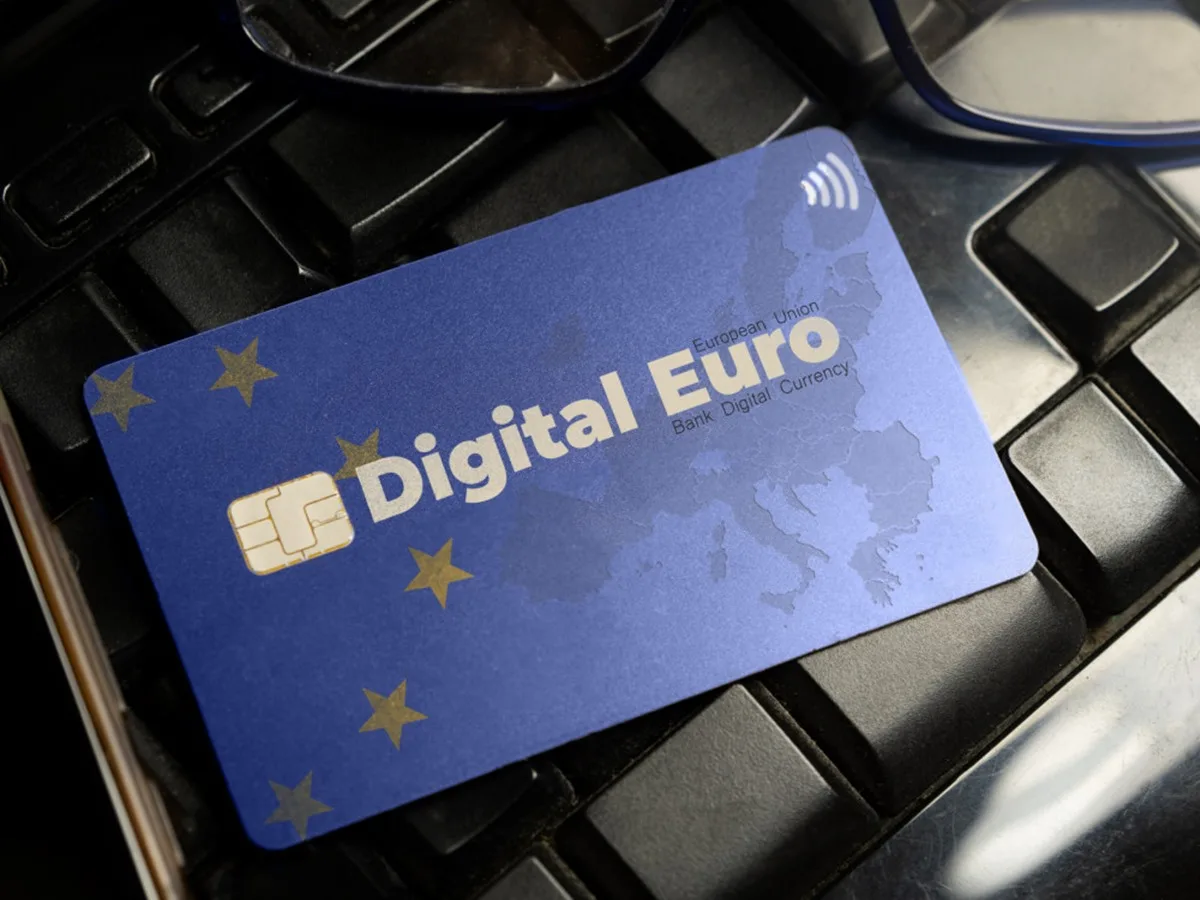
The European Union Finance Ministers adopted the Roadmap Map on Friday to Launch Digital Euro – the currency that should become an alternative to the now dominant American payment systems VISA and MasterCard.
Digital EUR Discussions, essentially electronic wallet under the European Central Bank (ECB), were intensified this year because the EU is determined to reduce the dependence on other countries in key areas such as energy, finance and defense.
The ECB Digital Euro presents Europe as a way to reduce the reliance on American credit cards, but also in response to the global promotion of stable U.S. Dollar Cpringers, which is forced by the current US President Donald Trump.
However, the project has not received legislative approval so far – MPs and bankers fear that they could empty bank balance sheets, be too expensive or compromise the privacy of users.
In progress, EU Finance Ministers in Copenhagen on Friday, at the Meeting of the ECB President Kristin Lagard and the European Commissioner Valdis Dombrovskis, agreed on the next steps. The agreement implies that EU finance ministers have the right to vote whether the digital currency will be issued and how much euro citizens will be able to keep in digital form – a key decision that should prevent panic and withdrawal deposits from banks.
“The compromise we came to is that, before ECB, the final decision on issuance, there is a possibility of discussion in the Council of Ministers,” Pašal Donoho, the Chairman of the Financial Ministers.
Lagard, Dono and DombrovskiS also welcomed the agreement for the Determination Digital EUR ductile procedure, although the details were not published, investor me. According to Reuters, the ECB will propose the limit that will then approve the Council of EU Finance Ministers.
Although the European Commission was still in June 2023. proposed a law on digital euro, the European Parliament and the European Council did not adopt it. The goal is for the advice to complete their part by the end of the year, while the ECB expects the law to be ready by June, after which the digital euro would need two and a half to three years.
Some EU members already have their national digital payment systems, but none is accepted throughout the 27 states block.
“Digital euro is not only a means of payment – it is also a political message on the sovereignty of Europe and its ability to manage payments, including cross-border, through European infrastructure and solutions,” Lagard at the press conference.