Switzerland could be the first major developed economy that would result in strengthening the domestic currency and falling prices for reclining negative interest.
This indicates that central banks around the world have fewer and fewer conventional tools for monitoring monetary policy in the circumstances of the Global Trade War.
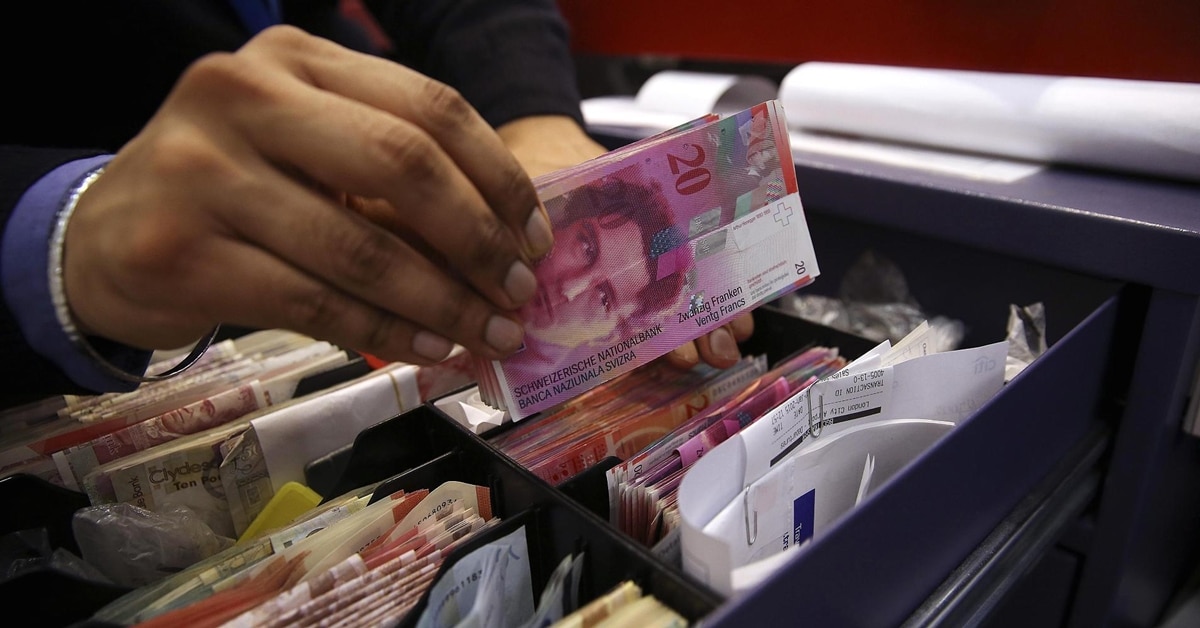
Statistics from this week showed a drop in consumer prices in May. This led financial markets to prepare for the prospective cutting of the interest rates of the Swiss National Bank (SNB). From the current 0.25 percent on the potentially below zero, in the fight to slow down the strengthening of the Swiss Frank.
Eve 2022. The European Central Bank interrupted the entire decade of holding interest rates below zero, which harms and banks and savers. Introduced to encourage lending, negative interest rate steering are the cost, ie the price you pay for borrows … completely turned an upside down conventional business method. Banks had to pay for holding deposits with the Central Bank, instead of receiving interest fees for this.
Many then concluded that negative interest rates did not give the desired results. They reduced bank profits, in the period when they were to invest, and foster investors focused towards more risky forms of assets. While Switzerland is now trying to encourage his economy, she found himself on the target of the US government. From the US, they announced that it would be closely monitored by its monetary policy and the management of the Swiss currency, transferred to the Finance BA. We remind you, Switzerland is traditionally considered a safe haven in unstable times.
Record of Frank’s value
The Global Trade War of the US President Donald Trump increased the risk of inflationary pressures and slower growth. This is a combination from the nightmares for central bankers, politicians, companies and households. It is problematic for officials outside the USA, which appreciate the currencies sensitive to customs names. From the euro and the British pound to the Korean Won and Taiwene dollar, which harms their exports and their economies.
The Swiss franc increased by almost 11 percent compared to the dollar from the beginning of 2025. year, which was written by the Finance. This is the largest growth in this part since 2011. The problem with which SNB and other central banks are facing is that in this environment traditional tools, such as changing short-term interest rates, have no effect.
Experts say that the central banks are difficult to create politics when factors that affect inflation outside their control. As a result, foreign exchange markets are practically pushing franc into negative interest rates. From the SNB, they refused to comment on the idea, but said on Friday that they were ready to intervention in the foreign exchange market “when necessary” to keep inflation under control. After Switzerland is included in the American list of countries under surveillance for “unfair currency and trade practices.”
Japan faces low interest rate
Although other central banks are engaged in the consequences of all weaker dollars. Switzerland has the lowest interest rates among major developed economies. Behind her is Japan with a reference interest rate of 0.50 percent. Japan is also struggling with the control of inflation, and the Japanese yen strengthened this year by 9 percent.
Governments of Japan and Eurozone are already planning huge public spending packages that should encourage economic growth. In addition to remove the possibility of negative interest rates. The European Central Bank (ECB) lowered the interest rate on Thursday at 2.00 percent. Another decrease is expected for 25 base points this year. The Japanese central bank still has more rates, although such a policy is uncertain, due to the influence of American customs.
“There are good reasons to believe that negative interest rates are not impossible for the next few years. If there are no major changes in economic narratives, anywhere except in Switzerland,” said George Moran, the European Economics Analyst.
The US Department of Finance monitors the situation
Trump has already published the president of the American Fed Jerome Powell on several occasions because he was “too slow” in lowering interest rates. The courses also bother him – he attacked China several times because he holds Yuan on artificially low levels to make Chinese exports remained inexpensive. Other countries that intervene in their currencies, such as Japan and Switzerland, also risking to become targets of Trump’s rage. Everything at the time they race for the conclusion of trade agreements with it.
The U.S. Ministry of Finance on Thursday in its semi-annual currency report has not marked Switzerland as a state that “manipulates the course,”. They added it to your monitoring list, which includes, among others, China, Japan and Taiwan. The SNB rejected the charges on Friday that he was engaged in manipulating Frank.
James Athey from the Marlborough Investment Consulting says that rapid changes that come in the global economy increase the risk of wrong steps. “All this increases the possibility of simply not know, and that we are wrong. That is true for all of us. For investors, for central banks,” Athey said. “It is more likely that we will be wrong about where we are and where we go. In addition to what will be outcomes for economies, for inflation and currencies.”