International drug-related crime poses a threat to social stability in Belgium, a top judge has said, after his colleague warned that the country is turning into a “narco-state” in which mafia groups form a “parallel force” in society.
Bart Willocx, president of Antwerp’s Court of Appeal, said Belgium was vulnerable to crime because of drug smuggling through the city’s huge port, one of the main entry points for cocaine smugglers into Europe. The Guardian.
The danger of the narco-state
“The amount of money that is at stake, for influencing people, for corruption and bribery, is so huge that it really poses a danger to the stability of our society,” Willocx said in an interview. Last October, a court in Antwerp took the unusual step of publishing an open letter from an anonymous investigating judge, who warned that Belgium was turning into a narco-state. Extensive mafia structures have taken root, he wrote, “becoming a parallel force that challenges not only the police, but also the judiciary.”
Willocx said Belgium is working to avoid such a fate, “but it’s an evolving process and it’s creating pressure, it’s a threat.” The chief prosecutor for the Antwerp and Limburg regions, Guido Vermeiren, agreed with the anonymous judge. “We are becoming a country with a lot of corruption and a lot of threats,” he declared.
Antwerp as an entry point
According to Europol data, more than 70% of cocaine entering Europe in 2024 passed through Antwerp and Rotterdam, although the agency said last year that criminals are increasingly using smaller ports. Belgium’s problem stems from increasing amounts of drugs arriving from South America, mainly Colombia.
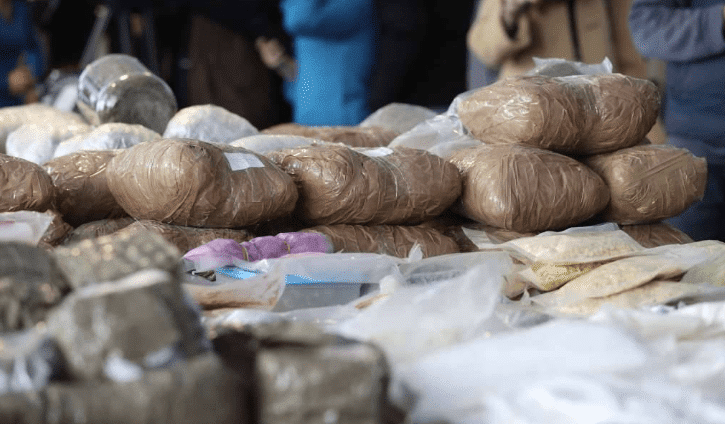
A record 121 tons of cocaine were seized in the country in 2023, fueling violent crime. Seizures fell to 44 tonnes in 2024, with the EU drug agency suggesting that this could be due to better chemical concealment of the drug and the relocation of operations to smaller ports. Organized gangs of drug smugglers are believed to be behind a plan to kidnap Belgium’s interior minister in 2022 and a series of shootings in Brussels in 2025.
Pervasive violence and corruption
Senior officials described widespread crime involving violence, shootings, kidnappings, torture and money laundering. “We really have a problem and we should invest more in staff and other resources to deal with it,” Willocx said. Vermeiren gave the example of a case where criminals paid more than 250,000 euros to a port worker to move a single container.
Workers who hesitate or refuse to help face threats and bombings. “They received letters, photos of their children. There were also attacks on their homes with improvised explosive devices,” said Vermeiren.
The prosecutor added that children as young as 13 are paid small sums to break into the harbor and steal cocaine, stressing that the gangs “don’t care what happens to these people.” He also described how gangs recruit young people, help them find jobs at the port, and then pressure them to do their bidding. In March 2024, police thwarted an attempt by four men armed with automatic weapons to steal more than 1,500 tons of seized cocaine from a customs warehouse.
Judiciary on target
Police officers and hospital staff were bribed or intimidated into giving away confidential information about public officials, such as the home addresses of judges, Willocx said. Because of this, Belgian judges increasingly have to live in safe houses. Vermeiren said he knew of several people under permanent protection, and the anonymous judge spent four months in a safe house. “From today until tomorrow you have to leave your home, your family and live somewhere where no one knows where you are,” Willocx described the gravity of the situation for his colleague.
Meanwhile, at the Court of Appeal in Antwerp, they are still awaiting the installation of scanners to check bags, equipment that the government promised two years ago. Both agreed that there is a possibility that judges will intentionally make a procedural error to avoid a conviction. “It can happen,” Willocx said. “The pressure on prosecutors or judges is too great. If we continue like this, what will happen is that many judges will prefer to avoid working on criminal cases for security reasons, because of the enormous pressure.”
The system is about to collapse
The anonymous letter was published as part of the “Five to Twelve” campaign, which warns courts and prosecutors in Antwerp that the Belgian justice system is dangerously close to collapse. The movement began with street protests by judges last May, and its goal is to raise public awareness of the crisis that threatens the rule of law. The judges proposed 100 reforms, from safer courts and tackling prison overcrowding to more attractive wages. Vermeiren said that the government “recognizes the problem, but it stops there.”
Judges say Belgium’s court system is on the brink of collapse after decades of underfunding. Doubts about adequate resources remain despite the Ministry of Justice’s promise from November to spend an additional billion euros by 2029. Willocx warned of a “vicious cycle” where underfunding makes the system vulnerable because it is perceived as not working well.
An insight into the criminal underworld
The true scale of organized drug trafficking was exposed when investigators in Belgium, France and the Netherlands cracked the encrypted Sky ECC communications network. Almost five years after the first arrests on March 9, 2021, Belgian authorities announced last month that 1,206 people have been convicted so far, mostly for drug-related, violence and corruption-related crimes, and nearly 5,000 potential suspects have been identified. The crackdown gave prosecutors a glimpse into a criminal organization that stretched from Dubai to South America. “It was even worse than we thought,” Vermeiren concluded.
(TYPE/Source: Index.hr/Photo Illustration/Hair dryer)