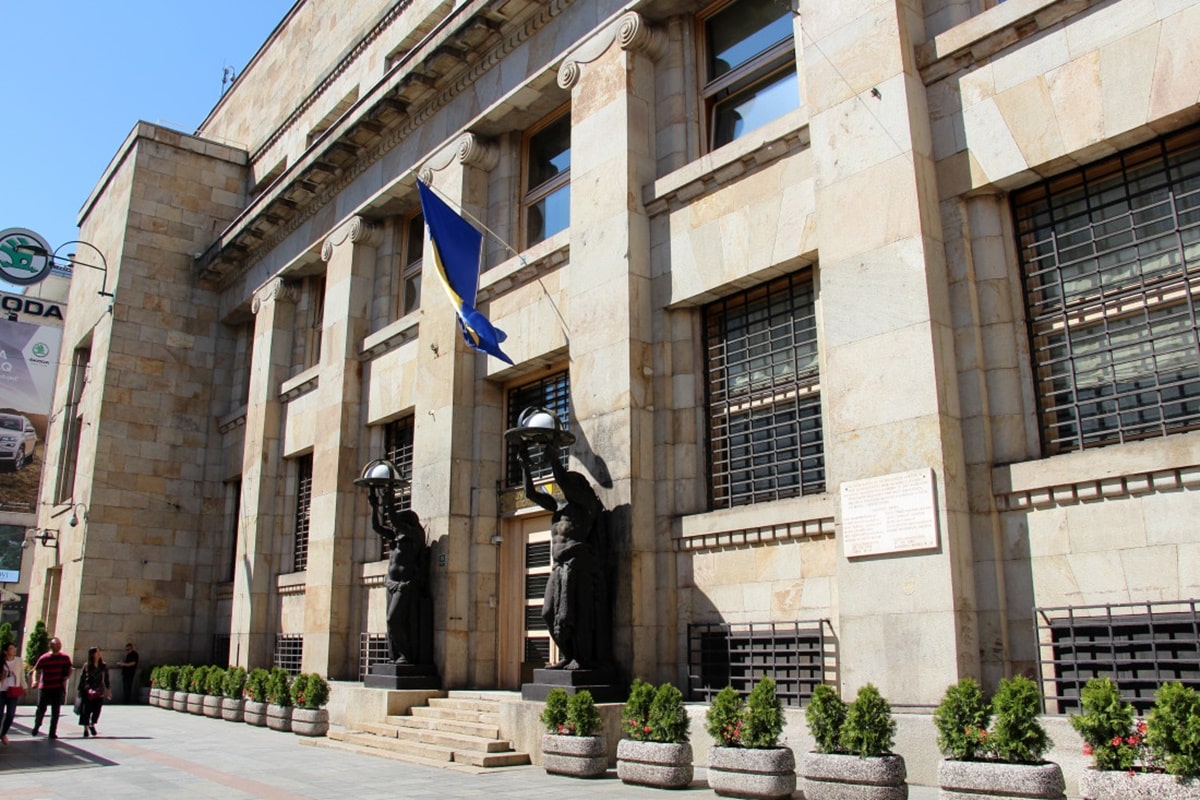
On the occasion of World Savings Day, on October 31, the Central Bank of Bosnia and Herzegovina (CBBH), as part of its traditional activities aimed at strengthening financial literacy, hosted more than 400 primary and secondary school students from different parts of the country.
Through educational workshops, interactive presentations and visits to the main units and branches of the CBBH, students had the opportunity to learn more about the importance of savings, responsible money management, and the role of the CBBH in preserving the stability of the domestic currency and financial system.
The activities were realized in cooperation with schools and teachers, with a special emphasis on practical examples and discussions about everyday financial decisions that contribute to the creation of healthy financial habits from an early age.
The latest data from the CBBH show that citizens’ trust in the banking sector and the domestic currency – the convertible mark (KM) – is continuously growing. At the end of September 2025, total household deposits with banks in Bosnia and Herzegovina amounted to 18.88 billion KM, which represents an increase of 1.94 billion KM or 11.5 percent compared to the same period of the previous year.
Household deposits make up 52.1 percent of total deposits in the banking sector and represent the key basis for financing and stable functioning of banks.
Observed by maturity structure: Term and savings deposits amounted to 5.65 billion KM (29.9 percent of total household deposits), with growth of 6.5 percent on an annual level, demand deposits reached 3.85 billion KM (20.4 percent), with growth of 6.1 percent, and transaction accounts amounted to 9.38 billion KM (49.7 percent), with growth of 17.3 percent compared to the previous year.
When it comes to the currency structure, household deposits in domestic currency (KM) amounted to 11.13 billion KM (58.9 percent of total household deposits), while deposits in euros and deposits in KM with a currency clause linked to the euro amounted to 7.03 billion KM (37.2 percent). Deposits in other foreign currencies amounted to 724 million KM, or 3.8 percent, reports Fena.
Household deposits in KM increased by 16.8 percent on an annual basis, which is the result of an increase in transaction accounts in local currency by 1.26 billion KM. Deposits in foreign currencies recorded a growth of 4.7 percent.
These indicators confirm that the citizens of Bosnia and Herzegovina increasingly recognize the importance of savings and have confidence in the stability of the convertible mark and the banking sector. The continuous growth of household deposits contributes to the stability of the financial system and enables banks to provide sustainable financing for the economy and the population.
By celebrating World Savings Day, the CBBH emphasizes the importance of financial literacy, responsible management of personal finances and developing saving habits from an early age, as a foundation for personal and social financial stability, the CBBH announced.
The World Savings Day commemorates the First International Congress of Savings, held on October 31, 1924 in Milan, where representatives of the world’s savings institutions sought a way out of the crisis caused by the First World War and concluded that saving is very necessary for development. The World Savings Day was also established with the aim of popularizing savings around the world.