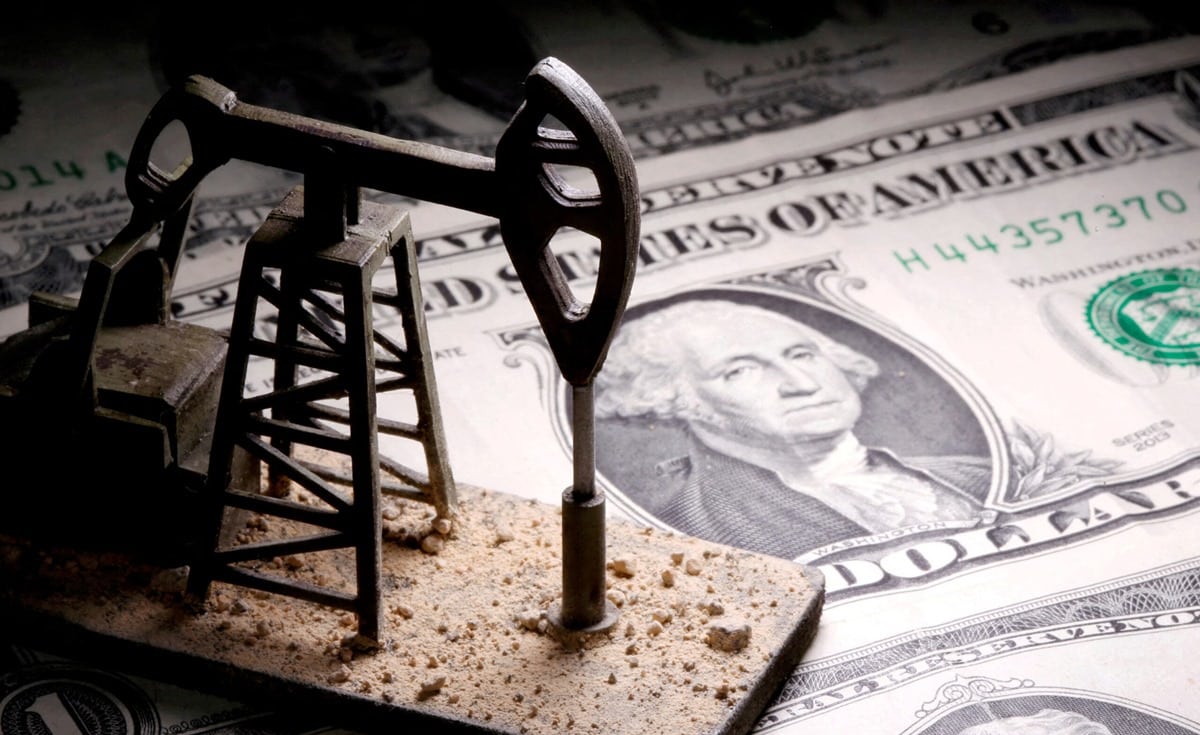
The motives for the US attack on Venezuela and for the capture of Venezuelan President Nicolas Maduro are probably numerous, but the public has barely touched on the hints of the White House’s strategy that should strengthen the position of the “petrodollar”, writes Reuters columnist Jamie McGeever.
Currently, Venezuelan oil production is modest and amounts to only one million barrels per day, and the reserves are the largest in the world and, according to some estimates, reach as much as 300 billion barrels, which is 17 percent of the total world reserves, according to McGeever.
US President Donald Trump has clearly indicated that the US is interested in exploiting that huge potential, and US oil giants should be part of his plans to revitalize Venezuela’s failing oil industry. Keeping that potentially huge future production in the American ‘orbit’ would affect energy markets, but would also ensure the position of the petrodollar, a tool that has long guaranteed the US dominance in the world financial system.
The rise of China
The term “petrodollar” was coined in the 1970s, when the US and Saudi Arabia agreed that the world oil market would be traded in dollars, thereby creating a new source of demand for the greenback and consolidating US strategic, economic and political power.
At the height of its power, the petrodollar was probably in the period from 2002 to mid-2008, when oil prices were close to $150 per barrel. At that time, the USA was the world’s largest importer of crude oil, which led the producer countries to have huge surpluses in trade with the USA, reports SEEbiz.
Exporters of “black gold” invested a large part of that surplus in US government bonds, returning the money to the US. This in turn meant lower yields on US government bonds and lower US borrowing costs. In 2026, the situation is completely different, warns the Reuters columnist. Thanks to the exceptional progress in the production of oil from shale, the USA is today the world’s largest oil producer and, from 2021, a net exporter of ‘black gold’.
A number of other producers, such as Saudi Arabia, have begun to patch up their own budget deficit with the surpluses that oil exports bring to them in foreign trade.
China’s rise to the position of an economic superpower and new political divisions have simultaneously reduced the share of global trade denominated in dollars. There are no official data, but it is estimated that today as much as 20 percent of the world’s oil trade is paid in other currencies, such as the euro or yuan.
The relationship between the dollar and oil has also changed, warns McGeever.
The petrodollar is weakening
The dollar exchange rate and oil prices have long been out of step because the strengthening of the greenback weakened the purchasing power of buyers with other currencies, and thus the demand, and the result would be lower oil prices. Thus, according to the calculations of JP Morgan bank analysts, in the period from 2005 to 2013, a 1-percent increase in the weighted value of the dollar led to a 3-percent drop in the price of a barrel of oil on the London market.
In the period from 2014 to 2022, the same percentage growth in the value of the dollar meant a drop in the price of a barrel of oil on the London market by only 0.2 percent, according to a Reuters columnist. In 2025, oil became cheaper, and the dollar also weakened.
Therefore, it is clear that the power of the petrodollar is weakening, as measured by the share of US government bonds owned by oil-producing countries, as well as the share of oil revenues in global capital flows, McGeever concludes.
Those indicators reflect the slow but continuous weakening of the global status of the dollar over the past few decades, according to the Reuters columnist, recalling that the share of the greenback in foreign exchange reserves is currently at its lowest level in 25 years.
The dollar is still the main currency of world trade, but its position in that area is also weakening, notes McGeever. President Trump’s cabinet is trying to buck those trends. According to them, the dollar should be somewhat weaker in order to make the American industry more competitive, but it should at the same time maintain its dominant position on global markets.
The recent events in Venezuela and the establishment of a certain degree of control over the largest proven oil reserves in the world may be part of a balance strategy in achieving these goals, along with threats of tariffs to countries that are trying to create an alternative to the dollar, primarily the BRICS group, the Reuters columnist speculates.
“The dollar is still the key currency in the oil market and the US is trying to preserve that position,” McGeever quoted Hung Tran, an expert from the American think-tank Atlantic Council, as saying.
“We’re a small voice, but I think it’s important that the board at least hear our voice as the seventh largest shareholder, because I think what they’re doing is wrong,” Halbower told CNBC. “If Paramount leaves, then it’s a lost opportunity.”