Last Friday, a 12-year-old boy from central Sweden took a train to Malmö and then shot and killed a 21-year-old man associated with the criminal underworld with a gunshot the same evening. A few hours later, the perpetrator turned himself in to the police and became the youngest suspect in a murder by firearm in Swedish history.
Although deadly violence within organized crime has been nothing new in Sweden for years, the age of the perpetrators in this case prompted a series of internal crisis meetings in the national police system, which is struggling to cope with the trend of younger and younger perpetrators of the most serious crimes.
Recruiting through social networks
Organized crime, usually associated with the trade in illegal narcotics, has turned to teenagers and children to carry out deadly actions. Recruitment mostly takes place online, in applications like Telegram. Police investigations show that potential juvenile offenders respond to “advertisements” themselves. Then the communication is moved to closed groups on apps like Signal.
Hoping to use criminal sanctions to discourage young people from entering the world of crime and making it impossible for them to be recruited, the Swedish government recently proposed lowering the age limit for the most serious crimes from 15 to 13. The proposal was immediately met with criticism, even within the justice system, with the argument that tougher sanctions, especially at that age, usually do not result in a reduction in crime.
Diamant Salihu, journalist of the Swedish public radio and television (SVT), who has been following the criminal underworld for years, in an interview for Index he was skeptical of the said measure and practically announced what happened last week in Malmö:
“In this type of violent crime, the age of the perpetrators is constantly decreasing. There is a risk that with the lowering of the age of criminal responsibility, organized crime will use even younger people who are threatened with lighter sentences to spread violence.”
Dagens Nyheter writes that the 12-year-old boy comes from a dysfunctional family and that his early childhood was burdened by violence, addictions and criminality by his parents. He appeared in the records of the social services as a one-year-old, and from the age of seven he lived with his grandmother with only occasional contact with his parents.
Difficult childhood and running away from home
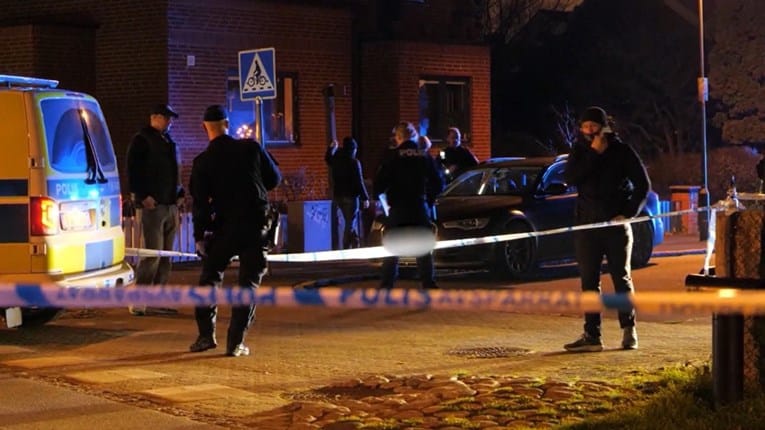
In the meantime, he ended up in a home for children under special care, from which he escaped two days before the murder. Then, late on Friday night, he appeared in Oxie, a suburb of Sweden’s third-largest city, Malmö, and shot a passing Audi carrying four people, allegedly “previously known to the police.”
The aforementioned 21-year-old, who died in the hospital the same night, was left in the back seat of the car in a nearby street, and his companions escaped, apparently unharmed. Police are not sure which of the four men was actually the target.
It seems that the 12-year-old perpetrator acted under threat and with the promise of a reward of 250,000 kroner (about 23,000 euros). Expressen writes that he agreed to carry out several murders, but as he did not do anything, the criminals lost patience and threatened him to leave for Malmö.
“We do not believe, of course, that the child alone planned and carried out this violent act, so we are looking for more people who could be involved in ordering and helping,” Malmö police spokesman Nils Norling told Dagens Nyheter, adding that the crimes involved are murder and three attempted murders.
“I firmly believe in early interventions”
Rasem Chebil is the head of the Malmö police investigation department and believes that this negative and frightening trend of violent crimes can only be stopped with the cooperation of the entire society – parents, schools, institutions and the police.
“It is better for parents to call the police once too often than once too little. That way we can prevent children from having serious consequences for the rest of their lives. I firmly believe in early interventions: investments in education, extracurricular activities and support already in preschool, elementary school and high school,” Chebil told Aftonbladet, Index.hr writes.
(TIP/Photo: TV4)