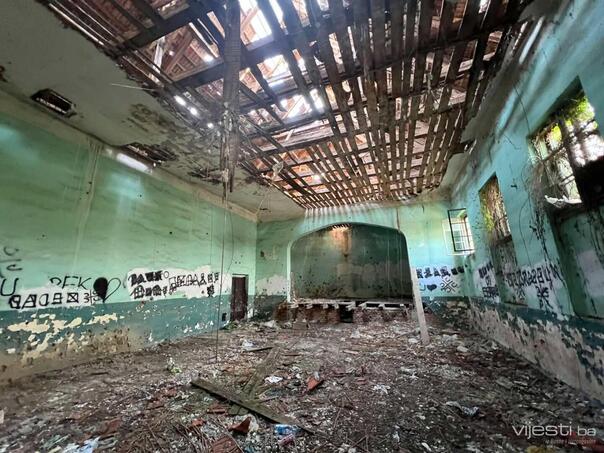
One of them is the House of Culture in Pilica near Zvornik, a building that, instead of a place for gatherings and cultural life, became a place of mass executions and a symbol of suffering.
The International Criminal Court for the former Yugoslavia established that on July 16, 1995, in the House of Culture in Pilica, members of the Republika Srpska Army killed hundreds of captured Bosniaks brought after the fall of Srebrenica. It is estimated that up to 600 people were killed in that building.
After the executions, their bodies were taken to mass graves and then moved to cover up the traces of the crime. However, the traces did not disappear.
They remained on the walls, in court verdicts, in the collective memory and in the pain of families who even today do not know all the circumstances of the death of their loved ones.
The fact that the crime of July 1995 was not the first gives special weight to this place. Back in 1992, the Dom kulture in Pilica was a place of detention for Bosniaks from Zvornik. From that facility, they were taken to be shot, among others, to Gera’s infamous slaughterhouse.
Thus, Pilica becomes one of the clearest testimonies of the continuity of persecution, murders and systematic violence against Bosniaks in the Podrinje area from 1992 to 1995.
The words of Fadile Efendić, who lost her son and husband in the genocide, perhaps best describe what Pilica represents to the survivors.
She talks about the feeling that overcomes her every time she comes to that place, about the eerie silence and the presence of traces that seem to testify to what happened even today. Such testimonies remind us that genocide is not just a statistic or a collection of court facts, but a profound human tragedy whose consequences last for generations.
Trials conducted before domestic and international courts have confirmed the responsibility of numerous individuals for crimes related to Pilica and the wider area of Srebrenica and Zvornik.
The judgments pronounced before the Court of Bosnia and Herzegovina and the Hague Tribunal represent an important contribution to the establishment of the truth and the fight against the denial of crimes. However, justice can never fully replace the lives lost or heal the wounds of the victims’ families.
Today, the House of Culture in Pilica is an abandoned building. Time has eroded its walls, but it has not erased the meaning it carries.
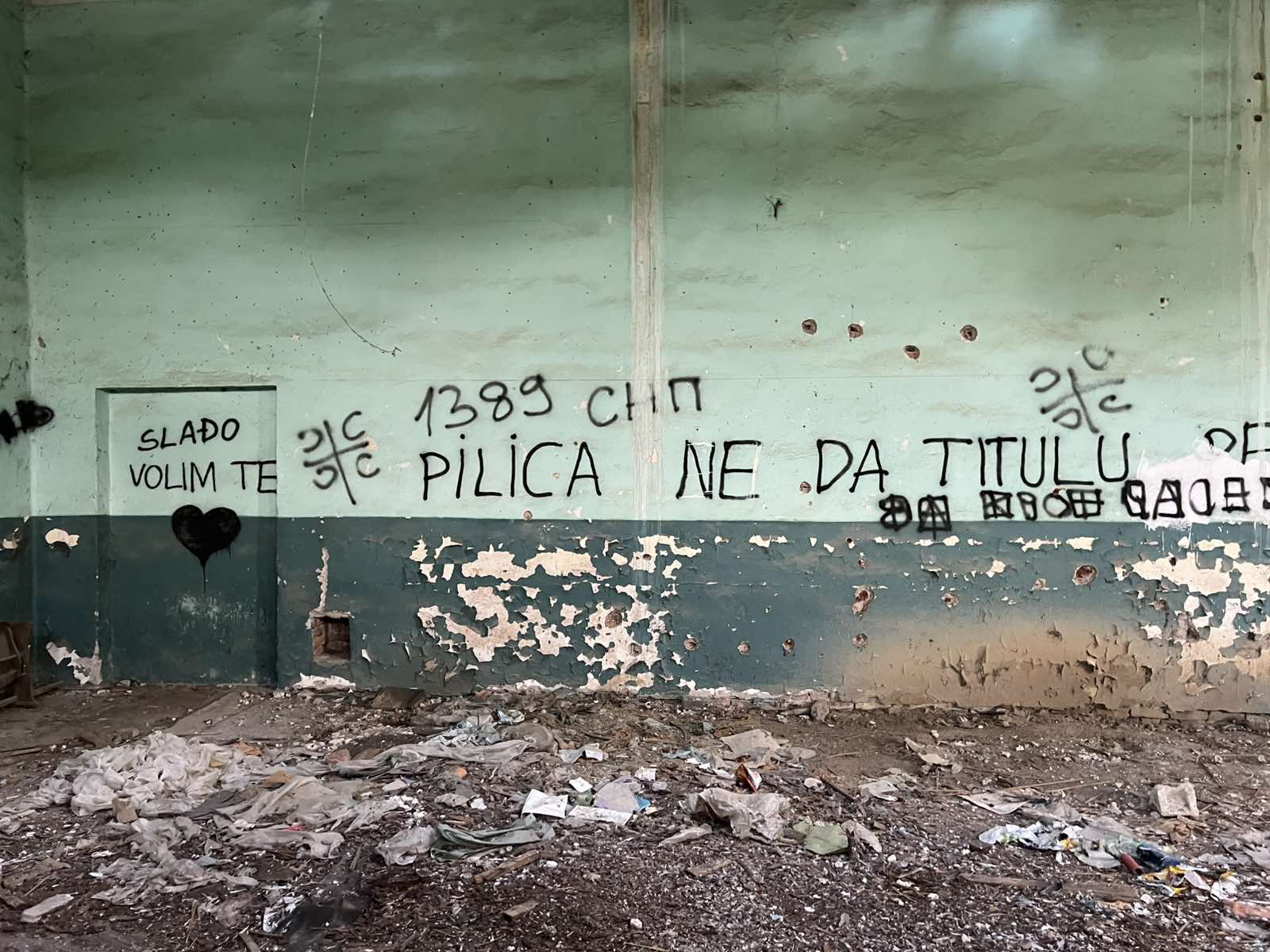
On the contrary, its neglect is an additional reminder of the need to preserve places of suffering as places of remembrance and warning.
Attempts to relativize and rewrite historical facts are particularly worrisome, because any reduction or denial of a crime represents a new humiliation for the victims and their families.
Pilica is not only a locality in eastern Bosnia. She is a symbol. A symbol of the suffering of innocent people, a symbol of the continuity of crime and a symbol of the obligation to preserve the truth from being forgotten.
As long as there are witnesses, court facts and memories of victims’ families, the House of Culture in Pilica will remain a silent but powerful witness to one of the darkest chapters of recent European history.
The memory of Pilica is not turned to the past for revenge, but for truth. Because only a society that is ready to face its own history can build a future in which such crimes will never happen again.
(Vijesti.ba)