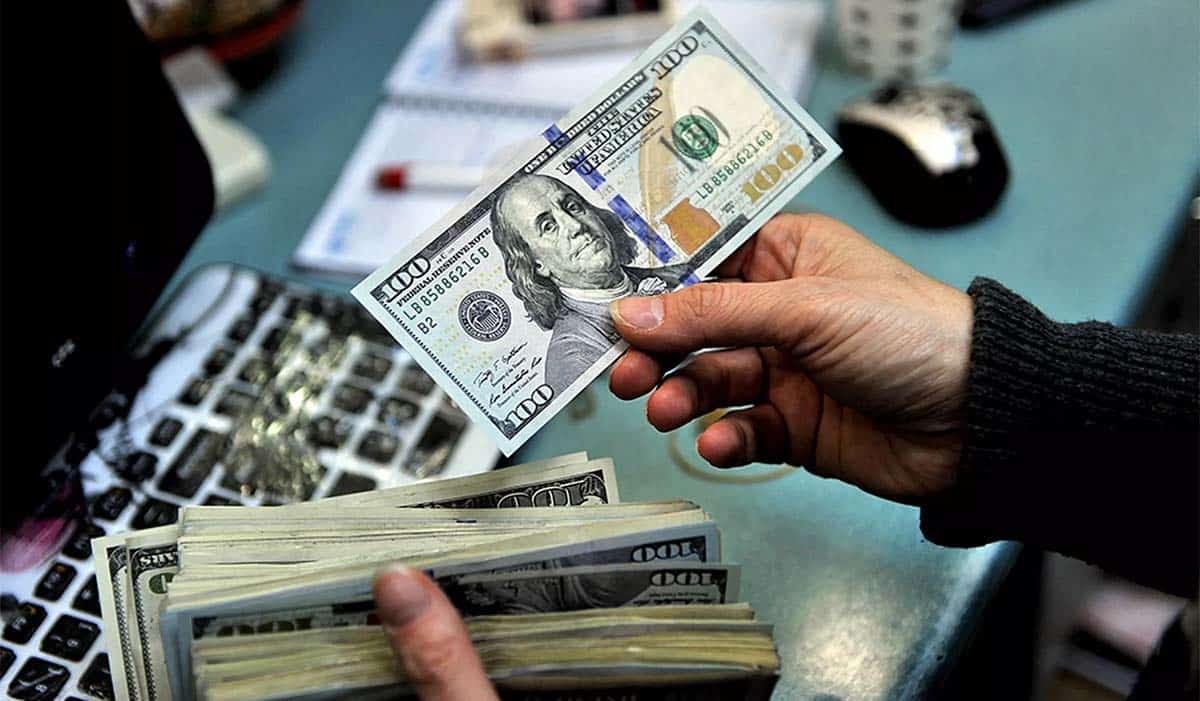
The US dollar records the largest decline in the first half of the year from the abolition of the Bretton Woods system, due to trade wars, debt and pressure on the federal reserves implemented by the President Donald Trump.
Investors around the world revise their attitude towards the former safe port of global finances.
The American dollar is on its way to record the worst result in the first half of the year since 1973, as the Tribu and economic policy of President Donald Trump states global investors to review their exposure to this dominant world currency.
The dollar index, which accompanies the value of the US currency compared to the basket of six other currencies (including Euro, pound and yen), fell more than 10 percent since the beginning of 2025. year – which is the worst start of one year from the abolition of the Golden Standard Bretton Woods system.
“The dollar became an instrument of Trump’s unpredictable economic policy 2.0,” Francesco Pesola, the exchange strategist of the bank Ing.
Tramps of occasional trade wars, huge US borrowing needs and increasing concerns due to the independence of the federal reservoirs have disrupted the status of the dollar as a secure port for investors, adding sandpies.
Dollar fell for an additional 0.5% on Monday for the beginning of the beginning of the Senate on Amendments on the Trimpo’s “large, beautiful” tax law, in the next decade, will increase American public debt for as much as $ 3.2 trillion, investor me. This law provoked serious concern on the fiscal sustainability of Washington, resulting in massive withdrawal of capital from the U.S. government bond market.
This fall in dollar approaches it to the worst six-month performance than loss of 15% from 1973, and the worst results in any semi-annual period since 2009. year, the Financial Times is written.
This trend is contrary to the initial predictions for 2025. year, which suggested that Trump’s trade aggression will more hit foreign economies, encourage inflation to the United States and thus strengthen the dollar.
Instead, the euro is – despite the predictions that fall to the parity with the dollar – exceeding a $ 1.17 level, as investors have focused on American economic growth, while demand for safe assets moved towards European bonds, especially German.
“We saw a kind of shock in the American political framework, especially after tramps the announcement of reciprocity in tariffs,” said Andrew Balls, the main investment director for global bonds in the Pimco investment company.
According to him, although there is no realistic threat to the status of the dollar as “does not mean that we cannot have significant weakening of its value”, because more and more investors diversify risks and reduces the exposure to the dollar – which further affects its fall.
Also, the expectations that federal reserves will be forced to significantly reduce interest rates to support growth – what the tramp insists – all are more pronounced. The market now expects at least five rates reductions per 0.25% by the end of next year.
Such expectations helped the growth of American actions, which managed to overcome the fears related to trade conflicts and instability in the Middle East, so the stock exchange indices reached new records. However, the weaker dollar means that the S & P 500 significantly lags for European indices when the measures are yielded in the same currency.
Large institutional investors – from pension funds to central banks – increasingly expressing the intention of reducing the presence of dollar and American assets, asking whether the dollar still provides the same protection against market turbulence as once.