Elevated values of air pollutants make breathing difficult because they do not allow sufficient oxygen saturation in the blood and lungs, especially in chronic patients, the elderly and small children.
That air pollution adversely affects people’s health is also confirmed by the fact that in the winter period, due to the higher concentration of harmful particles and gases in the air, an increased number of patients with problems related to the respiratory and cardiovascular systems turn to doctors.
In particular, the number of acute infections of the upper and lower parts of the respiratory system has increased (most often “scratching in the throat”, runny nose, cough). Long-term residence in environments with a high level of air pollution is an important risk factor for developing chronic respiratory and cardiovascular diseases, as well as for the worsening of already existing diseases. Research has shown that in urban areas where citizens inhale larger amounts of harmful gases and particles, they are more likely to suffer from chronic obstructive pulmonary diseases (bronchitis, asthma, emphysema).
However, air pollution is not the only causal factor in morbidity and mortality from respiratory, cardiovascular and other diseases. The aforementioned diseases can also be caused by unhealthy lifestyles (eg smoking, improper diet, insufficient physical activity), hereditary factors, etc.
Solving the issue of air pollution requires a multisectoral approach, i.e. participation of all relevant sectors and institutions (environment, urbanism, traffic, health, education, etc.).
In order to prevent acute and chronic diseases that arise as a result of air pollution, the population is advised to:
– Reduce movement outdoors, especially in the morning and evening hours, until precipitation or strong wind occurs, which will allow for better air quality
– Chronic patients, but also healthy people, especially children, are recommended to spend as much time as possible in the fresh air and in environments with a low level of air pollution (mountains, sea).
– Chronic patients need to take the prescribed therapy on time and go for regular check-ups with the doctor
– It is especially important that chronic patients, elderly people, small children and pregnant women do not stay in smoky and unventilated rooms
– Exercises and running outdoors are also not recommended, because in this way, due to deep breathing, larger amounts of air pollutants are introduced into the lungs.
– Reduce the consumption of cigarettes in closed rooms
– Reduce the use of solid fuel, especially coal that has poor quality
– It is recommended to take a sufficient amount of liquids (especially hot drinks – tea, soups) and fruits and vegetables, due to the intake of vitamins and minerals
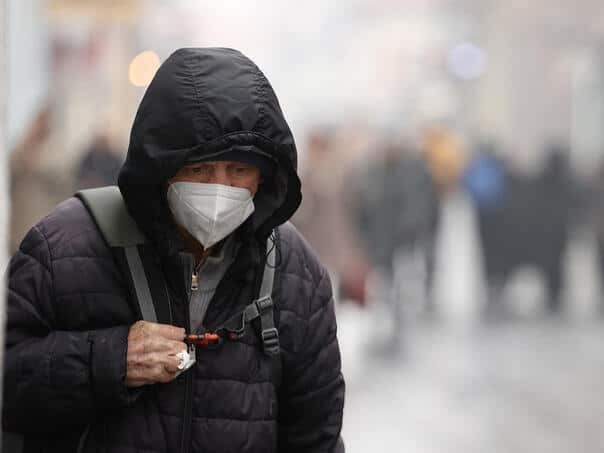
– When outdoors, use protective masks for air pollution (standardized protective masks provide the best protection)
Air pollution is the leading environmental risk factor for health and it is estimated that almost a third of the inhabitants of European cities are exposed to air pollution above the limit allowed by EU regulations, according to the latest report of the European Agency for the Protection of the Human Environment (EEA).
There are many air pollutants and countless combinations of them, but there are still some that are known to cause the greatest damage to human health and the environment. Hydrocarbons, ground-level ozone, carbon monoxide, nitrogen dioxide, sulfur dioxide and floating particles (smoke, soot, dust) are considered the most dangerous. Hydrocarbons (methane, ethane, propane, butane, etc.) are secondary products of industrial processes, and from the point of view of air pollution, the most important are gaseous and volatile ones. They can be present in large numbers in the atmosphere, and the biggest emitters are cooling devices and burning rubber. Sulfur dioxide is mainly a product of burning fossil fuels (coal), and toxic nitrogen compounds are mostly produced in power plants and automobile exhaust gases.
Carbon monoxide is one of the most widespread atmospheric pollutants, and its main sources are motor vehicles, combustion of solid, liquid and gaseous fuels and industrial processes.
The concentration of carbon monoxide, carbon dioxide, nitrogen and sulfur dioxide and floating particles (diameter 10 and 2.5 micrometers), especially increased during the winter. Floating particles with a diameter of 2.5 micrometers pose a particular danger to the health of the population, because they can reach deep into the lungs. The most at risk are chronic patients (especially cardiac and pulmonary), children, pregnant women and the elderly, as well as healthy people who stay outdoors for a long time.
(Vijesti.ba)