
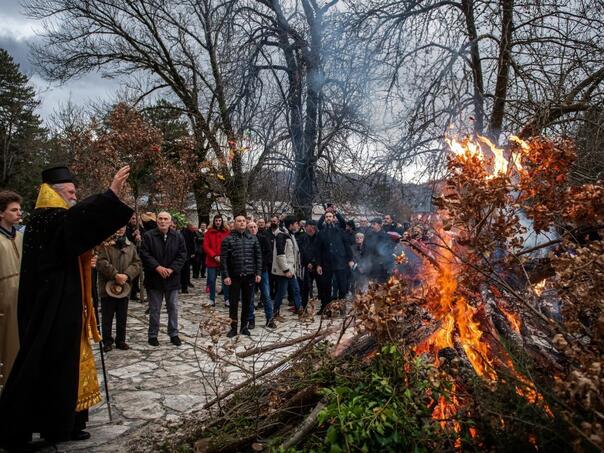
On Christmas Day, a Christmas tree is brought into Orthodox homes. According to tradition, the oldest male member of the family cuts down an oak or cherry tree, known as a Christmas tree, early in the morning. The tree should be cut down with three blows so that it falls towards the east.
The symbol of Christmas Eve is connected with the tradition that shepherds brought wood to Joseph and Mary to light a fire and warm the cave where Jesus was born. Christmas Eve is lit before Christmas, and its burning continues until the holiday, symbolizing the break with old beliefs and the acceptance of light and faith in the New Born Christ.
Customs related to the Christmas Eve carry a message of unity, love and harmony. People gathered around the Christmas tree bring the light of faith into the darkness of ignorance and superstition.
Among the Serbs, Christmas Day and Christmas are filled with many customs that revive the event of the Nativity in Bethlehem. On the eve of the holiday, homes are sprinkled with straw, symbolically turning into a Bethlehem cave. The straw reminds us of the place where Jesus was swaddled and where the shepherds first worshiped him. In the countryside, straw remains in homes for several days, while in cities, a smaller bundle of straw is often brought in and placed next to the Christmas tree.
Christmas roast is also prepared on Christmas Day, traditionally slaughtered the day before, on Tucindan. Christmas dinner is a fasting family meal, where fish, dried fruits, nuts and other fasting dishes are on the table. Christmas, as the first fat day, is celebrated with the communion of those who respected the rules of the Christmas fast.
Christmas Day and Christmas Eve, January 6, are celebrated by all Orthodox churches and believers who follow the Julian calendar, including the Russian Orthodox Church, the Patriarchate of Jerusalem, the Holy Mountain, the Greek Old Calendarists and the Coptic Orthodox in Egypt.
(Vijesti.ba)