Basic project objectives:
1. Legislative and strategic reforms:
– Analysis of existing policies and legal frameworks in BiH.
– Preparation and representation of amendments to the law with a focus on the improvement of the right to maternity, parental and paternal leave.
– Reconciliation of BiH legislation with EU directive 2019/1158 on the balance between the business and private life of parents and guardians.
2. Capacity Building:
– Training 32 union leaders, with a special focus of the principles, to advocate legislative changes and gender equality.
– Organization of 16 local workshops for more than 320 participants in order to spread knowledge and raise awareness.
3. Public consciousness campaign:
– Comprehensive campaign entitled “All Junior Junior” with the aim of reaching up to more than 500,000 citizens.
– Breaking patriarchal stereotypes and promoting equal division of parental responsibilities.
Key activities:
• Data research and collection: Quantitative and qualitative study on a sample of 430 women aged 18-45, with the aim of identifying obstacles and drafting recommendations for evidence-based policies.
• Education materials / manuals: elaboration of available resources for education of union leaders and general public.
• Study visit to Serbia: Exchange of experiences and taking over best practices in the field of gender equality and maternity rights.
• Proposals for changes in policy:
– Harmonization of maternity benefits at the level of entities and cantons.
– Promotion of flexible work arrangements.
• Implementation of public awareness campaigns: coverage of media platforms for redefining social attitudes on parental roles.
Challenges addressed:
• Uneven legislative framework: BiH currently has 12 different regimes for maternity compensation, leading to discrimination and uneven rights.
• Patriarchal standards: Deep rooted gender stereotypes limit the role of fathers in caring for children.
• Economic and institutional obstacles: inconsistent law enforcement and lack of financial support for maternity benefits.
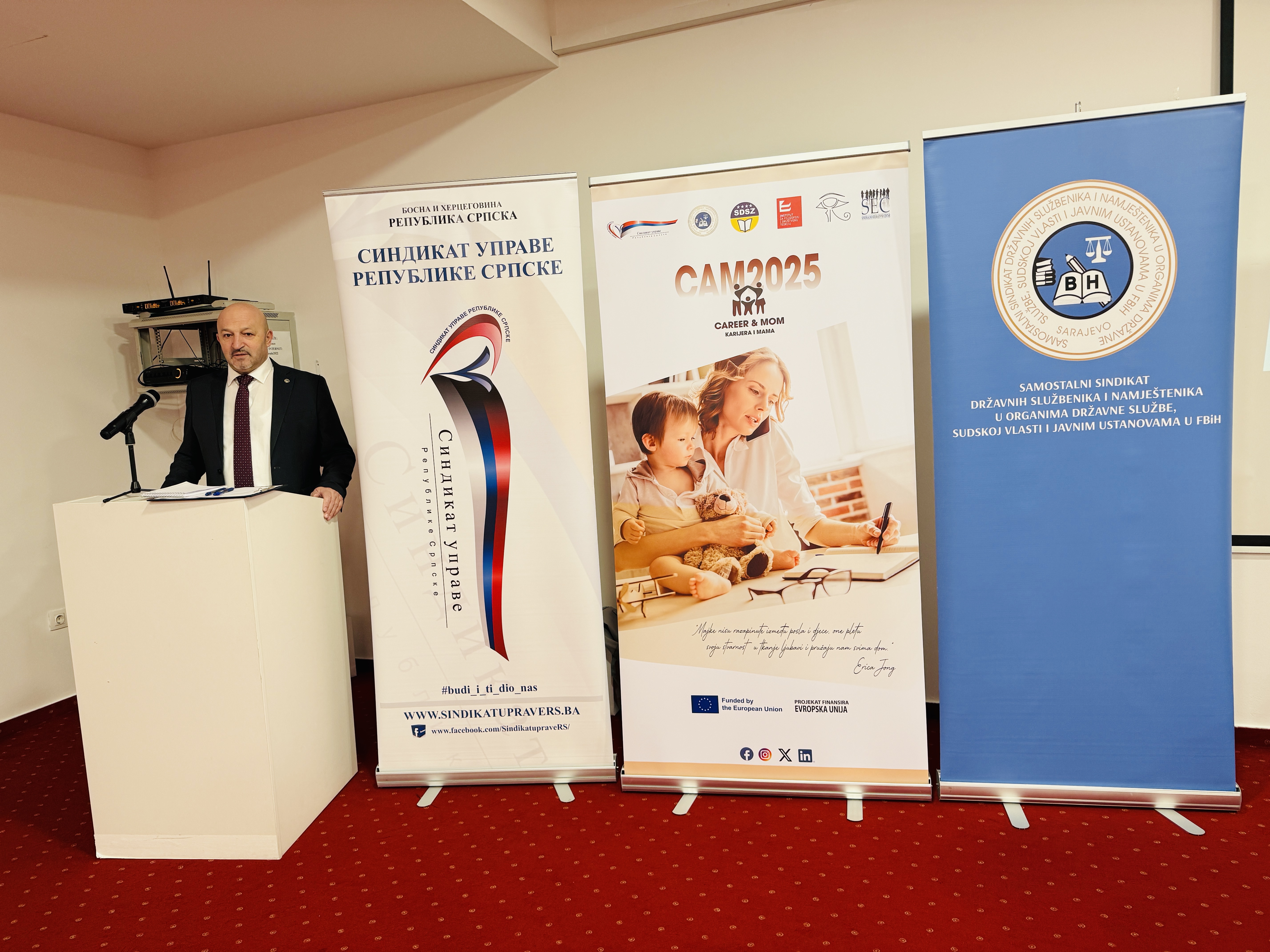
Project partners:
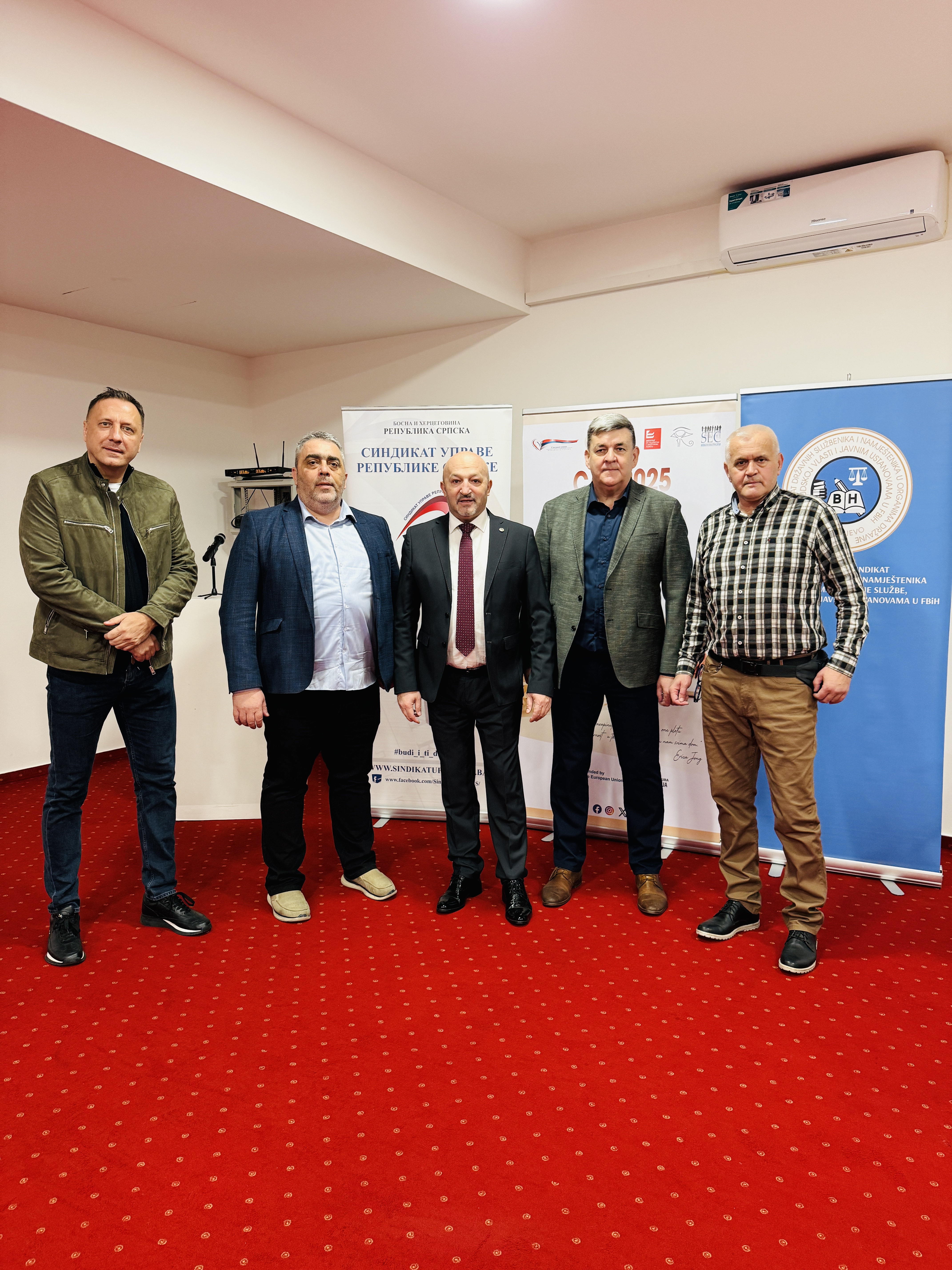
• Trade unions:
• Board of Directorate of the Republika Srpska (SURS),
• Independent union of civil servants and employees in civil service bodies, judicial and public institutions in the Federation of BiH (SUFBiH)
• Independent union of civil servants and employees in Bosnia and Herzegovina institutions (SDSZ)
• Research and Education Institutions: Institute of Zafilosophy and Social Theory of the University of Belgrade.
• NGOs: Organization for creative engagement (eye), union educational center (SEC).
Expected results:
• Establishment of a single right to maternity benefits in BiH.
• Creating system conditions for greater participation of fathers in Brisis children.
• Empowerment of union leaders and local actors for advocating gender equality.
• Promotion of common parental roles in order to break off traditional gender stereotypes.
• Support to parents in harmonizing careers and family life, with possible increase in births and reduce emigration.
Conclusion:
The CAM2025 is a timely and key initiative that is harmonized with EU priorities in the field of gender equality. By addressing system obstacles and promoting balance of responsibility, the project allows the creation of a fairer and supportive environment for women in BiH. This comprehensive initiative by combining research, advocacy, education and public engagement ensures long-term incidental changes.
(Vijesti.ba)