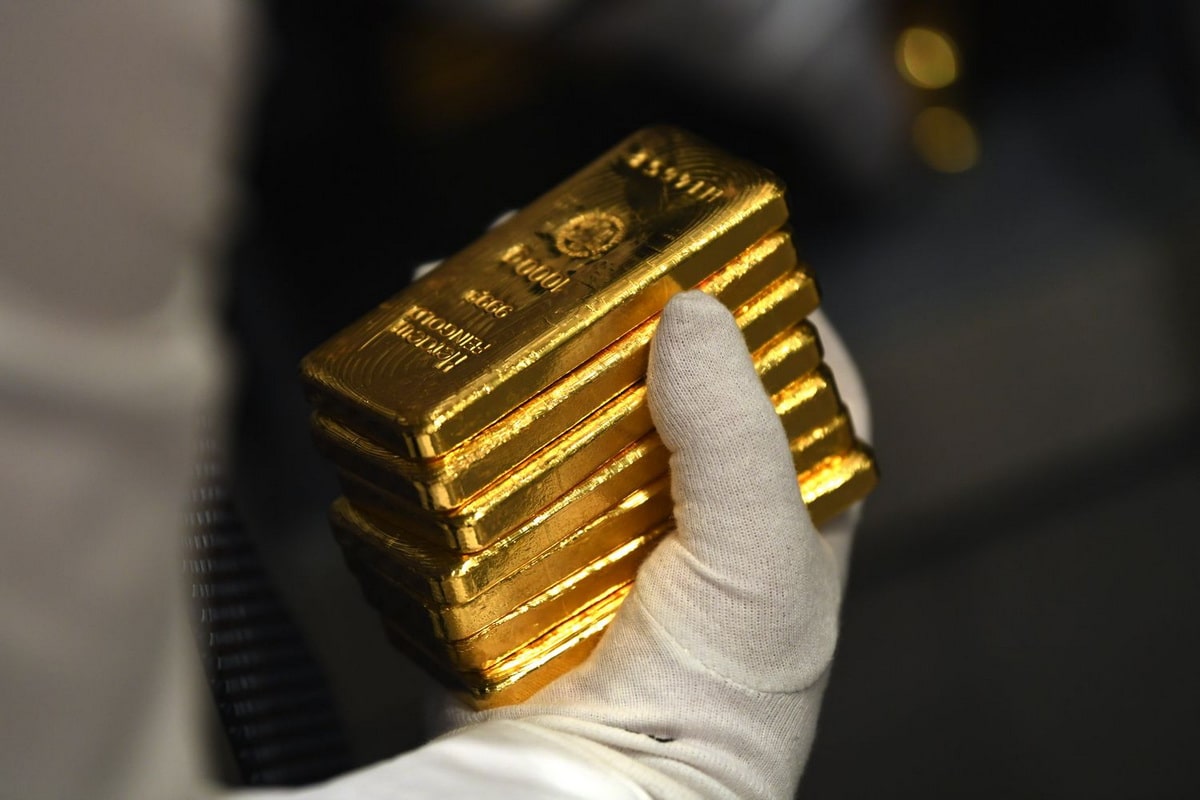
In an increasingly fragmented world, gold is regaining its status as a key safe haven.
Analysts at Deutsche Bank warn that rising demand from central banks – especially from emerging economies – could dramatically raise the price of this precious metal in the coming years.
Gold as a hedge against geopolitics and sanctions
Gold could be one of the biggest winners of global economic and political changes, according to Deutsche Bank.
In the latest analysis, the German investment bank points out that central banks around the world, especially in developing markets, are increasingly increasing gold reserves to protect themselves from financial risks and potential Western sanctions.
Such a trend is not new, but it is gaining intensity. Since the global financial crisis of 2008, central banks have increased their gold reserves by more than 225 million ounces.
At the same time, the role of the US dollar as the dominant reserve currency is weakening – its share of global reserves has fallen from more than 60% in the early 2000s to around 40% today.
De-dollarization is no longer a theory
Buying gold is no longer reserved for the biggest global players like China, Russia, India and Turkey. The trend is spreading to countries like Kazakhstan, Saudi Arabia, Qatar, Egypt and the United Arab Emirates, which indicates a wider transformation of the global financial system.
The message is clear: an increasing number of countries want to reduce their dependence on the dollar and increase their monetary autonomy.
Scenario: Gold $8,000 per ounce
If this trend continues, the share of gold in the global reserves of central banks could rise from the current 30% to even 40%.
In that scenario, Deutsche Bank’s simulation shows the potential for the price of gold to reach as high as $8,000 an ounce in the next five years – which would represent an increase of around 80% from current levels.
Although the bank emphasizes that it is a conceptual model and not an official forecast, the estimate fits with the broader industry consensus: gold is becoming a key beneficiary of the global de-dollarization process.
Geopolitics dictates the market
According to research by the World Gold Council, central banks cite economic uncertainty and growing geopolitical tensions as the main reasons for increasing gold reserves, Investor me reports.
Since the beginning of the year, the price of gold has increased by almost 8%, continuing the strong upward trend from the previous year, fueled precisely by central bank purchases.
However, the outbreak of conflict between the US and Iran has shaken the market – gold has lost about two-thirds of the gains it made at the beginning of the year, when it reached record levels.
What does this mean for investors?
Everything points to the fact that gold is no longer just a “safe harbor” in crises, but a strategic instrument in the new global financial architecture.
If the erosion of confidence in US assets continues and the de-dollarization process accelerates, gold could become the central pillar of reserves – and one of the most important indicators of the changing global economic balance.