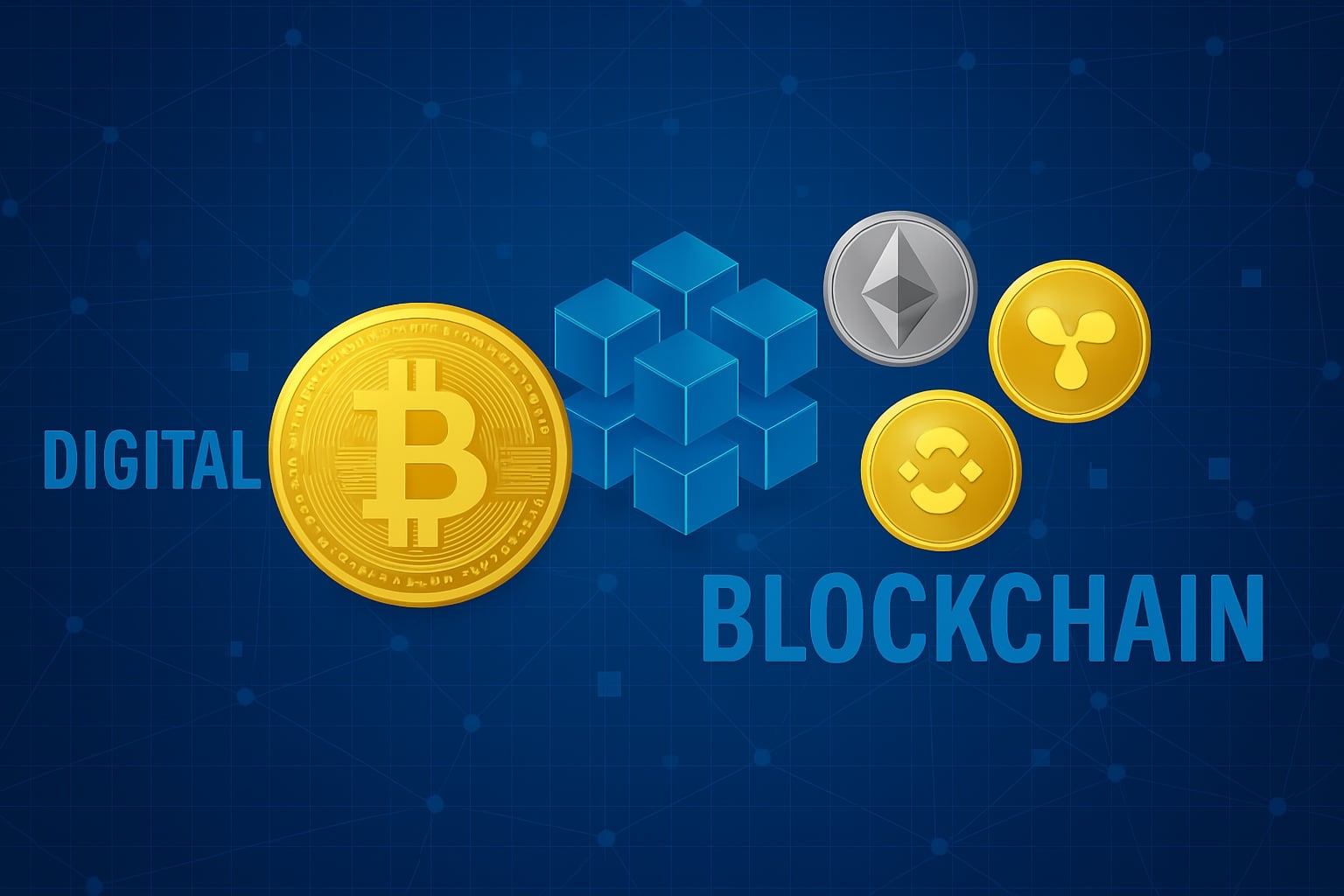
The digital currency and blockchain technology has been causing great attention in the financial sector for several years.
Although many initially thought that these technologies are only a transient trend, today become an indispensable part of modern business, which changes the way we think about money, transactions and safety in financial systems. In this analysis, we will consider how digital currencies and blockchain technologies work, which advantages and challenges bring you and whether to become a key factor in the future of finance.
The digital currency, ie cryptily, are a form of money that is not related to traditional financial institutions such as banks. The most famous among them, Bitcoin, was created in 2009. As a decentralized form of money that allows users to perform transactions directly, without intermediaries. Since then, the number of digital currencies increased significantly, including ethereum, ripple, litecoin and many others. All of these currencies use BlockChain technology, which allows secure, transparent and decentralized storage data.
Blockchain is a technology that allows storage data in the form of blocks, which are interconnected and insured using cryptography. Each transaction performed on the blockchain network is recorded in the public book, making it transparent and impossible to change. Due to its decentralized nature, Blockchain does not require intermediaries, which means transactions are faster and cheaper, while security increases because it is not possible to falsify or change data without being recorded.
Although the initial application of BlockChain technology was related to crypto, its potential application far exceeds only finances. Many industries, including health, logistics, and real estate, explore the possibilities of how BlockChain can improve business processes. For example, in healthcare, BlockChain can help monitor medical data patients, while in logistics could improve shipment tracking and reduce administrative costs.
However, despite great advantages, there are numerous challenges and risks related to digital currencies and blockchain technology. One of the main problems is the volatility of prices. Cryptaluts are known for being able to experience large jumps and falls in very short periods of time. This creates insecurity for investors and users who want to use crypto as a stable form of asset or payment. Also, although BlockChain offers high safety, due to the anonymity associated with digital currencies, it is used in illegal activities such as money laundering or terrorism financing.
Additionally, the issue of regulation remains the main challenge for many countries. There is currently no global frame that would regulate the use of crypto and blockchain technology, and each country accesses this issue in its own way. While some states, such as El Salvador, accepted Bitcoin as a legal means of payment, many other countries, including China and India, banned or limited by the use of cryptovalut. This creates insecurity in the market and makes it difficult to predict the future of digital currencies.
However, even with these challenges, many large financial institutions, including JPMorgan, Goldman Sachs and Paypal, are increasingly accepting crypto and blockchain technology. In recent years, we have witnessed an increase in institutional investments in Bitcoin and other digital currencies, which indicates that the crypto is not just a transient trend, but may become permanent part of the global financial system.
Question about whether digital currencies and blockchain technology be a revolution in finance or just a transient trend depends on many factors. If problems such as volatility, safety and regulation are successfully solved, digital currencies and blockchain could become a key tool in the financial sector and beyond. However, their long-term success depends on whether a more stable ecosystem will develop and whether the state, regulatory bodies and financial institutions match their views about their use.
Ultimately, although there are currently many challenges, digital currencies and blockchain technologies are already deeply rooted in global business and will surely have a growing impact on the financial industry in the coming years. Regardless whether they will climb as a revolutionary alternative to traditional forms of money or will become complementary solutions, it is clear that the digital currency and blockchain will not disappear so easily.